RE-Source, REUSE services by CTP environnement
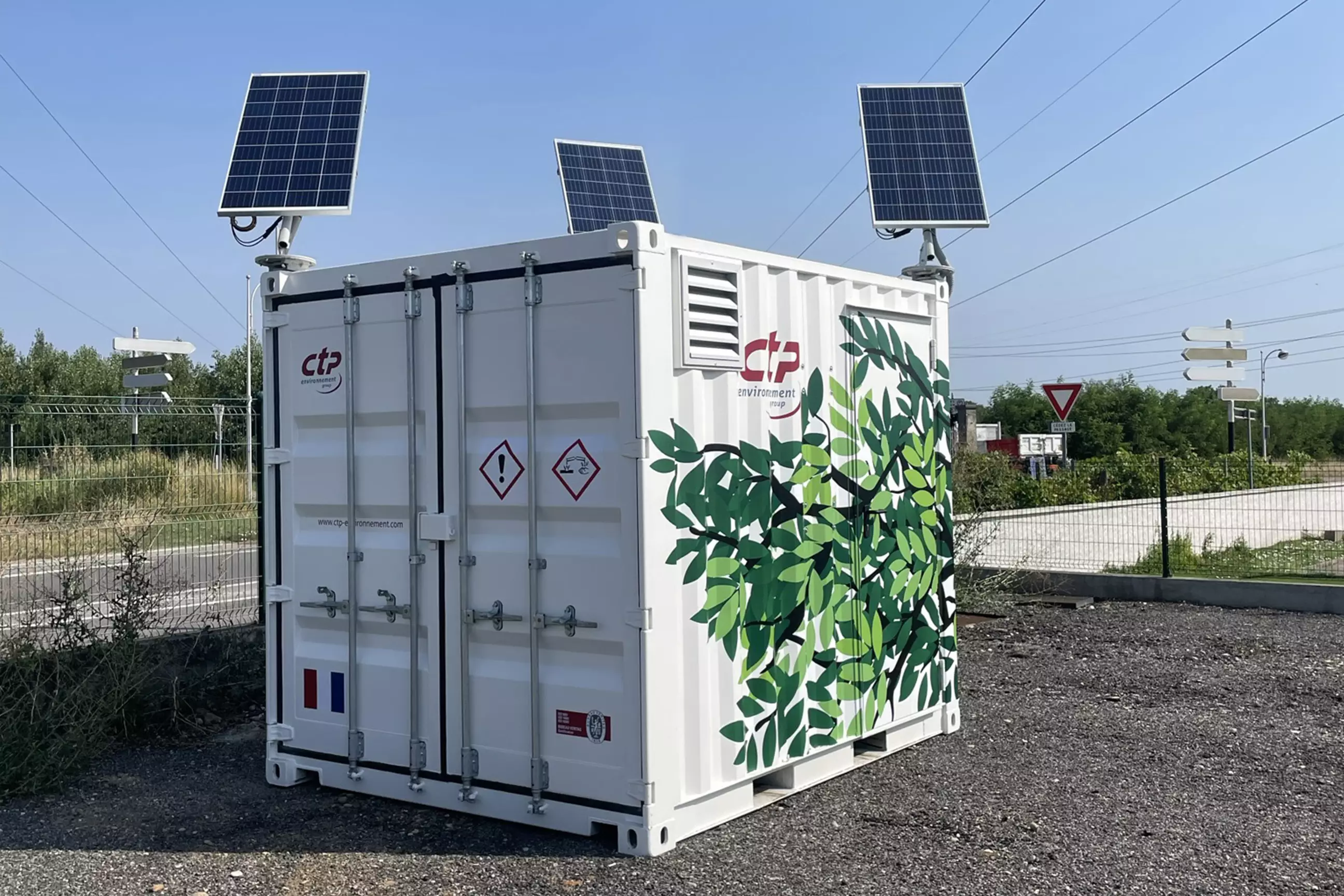
With environmental challenges and the growing need for water, the reuse of treated wastewater is a sustainable solution that has become essential.
As world experts using mobile units in this field, CTP environnement supports industrial companies in their water reuse projects.
Our wastewater reuse services help preserve natural resources and reduce our ecological footprint.
Let's discuss your project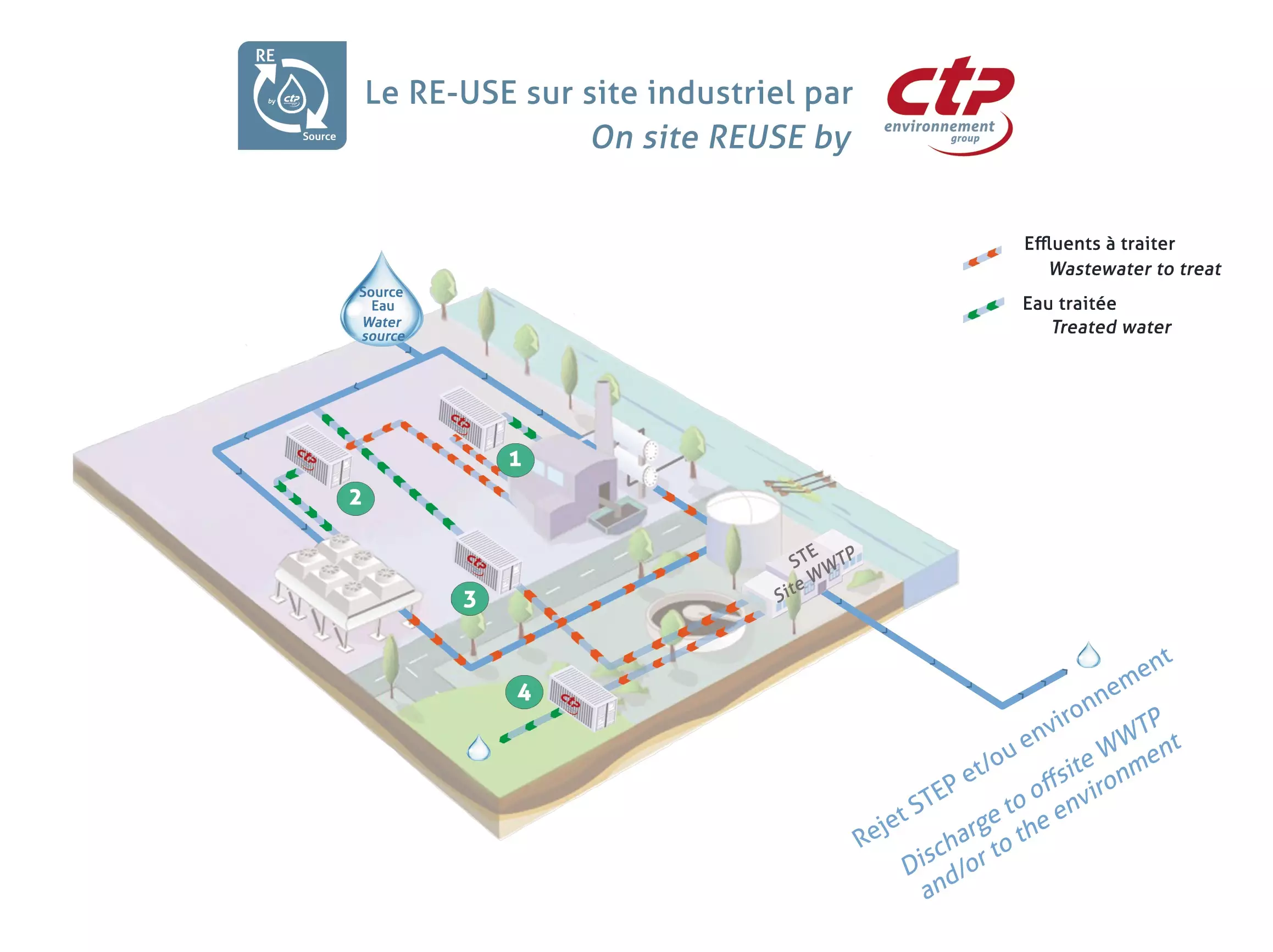
For all industries and sectors of activity, we offer:
1 - Within the same production unit
2 - Across different production units
3 - For industrial purposes
4 - For authorised non-industrial purposes (irrigation, fire water storage, etc.)

Our experts are committed not only to design effluent treatment systems, but also to recommend the most appropriate mobile unit(s) for their implementation.
Our innovative mobile units are available on a turnkey or rental basis.
Consult Our Technical Experts
To meet the specific needs of your industry
From initial audit to implementation and monitoring of solutions
REUT (treated wastewater reuse) involves reusing previously treated wastewater for new purposes. It is part of a broader REUSE (water reuse) approach, which aims to reduce freshwater withdrawals and promote a more circular use of water resources.
In industry, water reuse can serve various purposes, depending on effluent characteristics, required water quality and applicable regulations.
Internal non-potable use :
Non-drinking water external to the site :
For food production and processing companies, specific dedicated regulations: French public health code and European regulations.
Reduced water withdrawals: Reduce the need for freshwater by reusing treated wastewater.
Industrial operational continuity: Help reduce dependence on conventional water resources and mitigate certain impacts of water use restrictions.
Cost optimisation: Potentially reduce costs associated with water supply and effluent management, depending on the specific characteristics of the project.
Operational flexibility: Deploy mobile or temporary treatment solutions tailored to evolving industrial needs.
All our existing units can be used.
We most frequently use CLEARFLOW®, GEOFLOC®, AEROMOBIL®, NEUTRAMOBIl®, CLEARDRY® and filtration equipment in response to current needs. However, for more specific needs, our design office can adapt an existing unit or create a new one.
Why should you trust us?
Our passionate teams put their skills at your service to support you, from the very beginnings of your project right through to its implementation in the field. We take particular care to offer effluent treatment solutions that fit in with your process.
What are the mandatory steps in each dimensioning process?
1. An identified need
2. Objective analysis of input data
3. Proposal of one or more comparative treatment processes
4 (If necessary) study of the implementation of the process for prior approval
5. Costing for implementation on an industrial scale
6. On-site implementation
For non-standard projects, we offer customised studies to consolidate the input data and find the best technical solution for deployment on your site.
The laboratory tests carried out can, on request, be supplemented by various deliverables: schematic diagram, PFD, calculation notes (hydraulic, biological, etc.), process operating notes, layout drawings, etc.
Vous souhaitez réduire votre consommation d'eau, valoriser vos effluents traités ou étudier une solution de réutilisation adaptée à votre site industriel ?